U.S. Fortified Dairy Products Market growing at a CAGR of 4.1% from 2025 to 2033
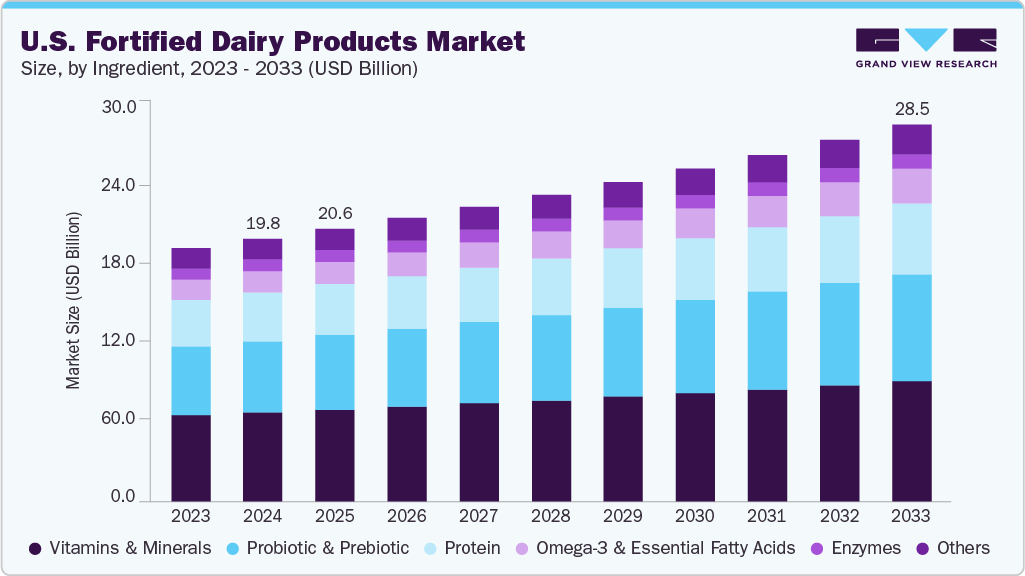
The U.S. fortified dairy products market size was estimated at USD 19.82 billion in 2024 and is projected to reach USD 28.41 billion in 2033, growing at a CAGR of 4.1% from 2025 to 2033. The increasing health-conscious consumer base drives market growth.
Key Market Trends & Insights
- By product, the milk segment accounted for a market share of 65.66% in 2024.
- By ingredient, the vitamins & minerals segment held a market share of 33.85% in 2024.
- By distribution channel, the hypermarket/supermarkets segment dominated the market with a revenue share of 41.55% in 2024.
Market Size & Forecast
- 2024 Market Size: USD 19.82 Billion
- 2033 Projected Market Size: USD 28.41 Billion
- CAGR (2025-2033): 4.1%
Request Free Sample Report: https://www.grandviewresearch.com/industry-analysis/us-fortified-dairy-products-market-report/request/rs1
With an increasing focus on health and wellness, consumers are becoming more inclined toward dairy products that offer additional benefits such as improved digestion, immunity, and heart health. The demand for plant-based dairy alternatives, enriched with nutrients such as calcium, vitamins, and probiotics, has gained significant traction, driven by the rise in vegan and lactose-intolerant populations. Additionally, an increase in lactose intolerance and the growing preference for dairy alternatives have created opportunities for plant-based fortified dairy options, such as almond and soy milk, further expanding the market. For instance, according to the National Institute of Diabetes and Digestive and Kidney Diseases (NIDDK) data, about 36% of Americans have lactose malabsorption.
According to the data published by Boston Children’s Hospital Services, about 30 to 50 million people in the U.S. are lactose intolerant. Moreover, fortified dairy products, such as milk and yogurt, enriched with calcium, protein, and probiotics, are increasingly popular as Americans seek convenient options to enhance bone health, digestive health, and overall nutrition. This has urged key players to introduce new products to cater to the changing consumer preferences. For instance, in February 2023, Dairy Farmers of America, Inc., collaborated with Good Culture to produce a new probiotic milk free from lactose. The new product is available in two variants: whole milk and 2% reduced-fat options. It is formulated with 1 billion probiotic cultures per 12-oz serving to support digestive and immune health. The U.S. market for fortified dairy products is booming due to a high level of health consciousness among consumers, driven by a focus on disease prevention, fitness, and overall well-being.
Consumer Insights for the Fortified Dairy Products Market
The expansion of protein fortification beyond traditional sports nutrition to cater to a broader demographic has opened up new opportunities for brands in the market. Men consume more fortified dairy products than women, primarily for muscle-building and fitness purposes, as protein supports muscle repair and growth. Their higher caloric and protein needs also drive this trend. Women, on the other hand, prioritize fortified dairy for weight management, bone health, and overall nutrition. Fortified dairy provides a convenient way for both men and women to meet their dietary needs while maintaining a balanced diet.
According to GVR analysis, the percentage of adults consuming fortified dairy products increased with age, peaking at 41% among those aged 55 years and above, compared to 21% among individuals aged 18-34 years.
Consumer perception plays a crucial role in shaping the U.S. fortified dairy products industry. The way consumers perceive these products directly influences their acceptance, demand, and, ultimately, the success of such items in the market. Older adults may have different sensory sensitivities, oral health issues, and preferences compared to younger demographics. According to a Multidisciplinary Digital Publishing Institute (MDPI) report published in November 2022, protein fortification is crucial for older adults to address malnutrition and combat sarcopenia, which is characterized by age-related loss of muscle mass and strength.
Product Insights
The milk segment led the U.S. fortified dairy products market with the largest share of 65.66% in 2024. With modern lifestyles limiting sun exposure and dietary diversity, deficiencies in essential nutrients, particularly vitamin D and calcium, have become widespread. Fortified milk serves as an effective dietary solution to combat these deficiencies, particularly for vulnerable populations, including children, pregnant women, and the elderly. Moreover, the expansion of plant-based fortified milk alternatives has broadened the market. As lactose intolerance and plant-based diets gain popularity, fortified almond, soy, and oat milk variants have seen increased adoption. These products are enriched with the same essential nutrients as traditional dairy, making them an attractive choice for consumers seeking non-dairy options that do not compromise on nutrition.
Ingredient Insights
The vitamins & minerals segment held a 33.85% share of the U.S. fortified dairy products industry in 2024. Vitamins and minerals play a crucial role in enhancing the nutritional value of fortified dairy products, making them more beneficial for consumers. Fortification helps address nutrient deficiencies, particularly in essential areas like bone health, immune support, and energy metabolism. Vitamin D is commonly added to enhance calcium absorption, thereby reducing the risk of osteoporosis. Meanwhile, B vitamins support energy production and cognitive function. Additionally, iron fortification helps prevent anemia, and nutrients like vitamin A, vitamin C, and zinc strengthen the immune system, making fortified dairy a more functional dietary choice.
Distribution Channel Insights
The sale of fortified dairy products through the hypermarkets/supermarkets accounted for a 44.55% share of the U.S. fortified dairy product market in 2024. Supermarkets and hypermarkets are gaining popularity due to their wide range of options and the convenience of purchasing everything in one location. The availability of various products also enables customers to choose from multiple options according to their preferences, dietary requirements, and budget. Moreover, consumers are likely to trust the quality of products available at well-established hypermarkets and supermarkets, and therefore prefer to buy from them. This makes supermarkets a convenient and preferable distribution channel for fortified dairy products.
Sales of fortified dairy products through online channels are anticipated to grow at a CAGR of 5.3% from 2025 to 2033. The increasing digitization and rising e-commerce are expected to further contribute to the market growth. According to the Food and Agriculture Organization of the United Nations (FAO), the rising emphasis on healthy living, the increased expectation for personalization, and the rapid integration of technological innovations are driving the growth of the customized nutrition sector and affecting the consumption habits of the customers, which is expected to drive market growth.
U.S. Fortified Dairy Products Market Report Scope
|
Report Attribute |
Details |
|
Market size value in 2025 |
USD 20.59 billion |
|
Revenue forecast in 2033 |
USD 28.41 billion |
|
Growth rate |
CAGR of 4.1% from 2025 to 2033 |
|
Actuals |
2021 – 2024 |
|
Forecast period |
2025 – 2033 |
|
Quantitative units |
Revenue in USD billion and CAGR from 2025 to 2033 |
|
Report coverage |
Revenue forecast, company ranking, competitive landscape, growth factors, and trends |
|
Segments covered |
Product, ingredient, distribution channel |
|
Country scope |
U.S. |
|
Key companies profiled |
Nestlé S. A; Danone S.A; FrieslandCampina; LACTALIS; The Kraft Heinz Company; General Mills Inc.; Dairy Farmers of America, Inc.; Müller Group; Yili Group; AMUL (GCMMF) |
|
Customization scope |
Free report customization (equivalent up to 8 analysts’ working days) with purchase. Addition or alteration to country, regional & segment scope. |
|
Pricing and purchase options |
Avail customized purchase options to meet your exact research needs. Explore purchase options |