Artificial Insemination Market to Grow at 6.5% CAGR Through 2031 as Fertility Awareness and Reproductive Technologies Advance
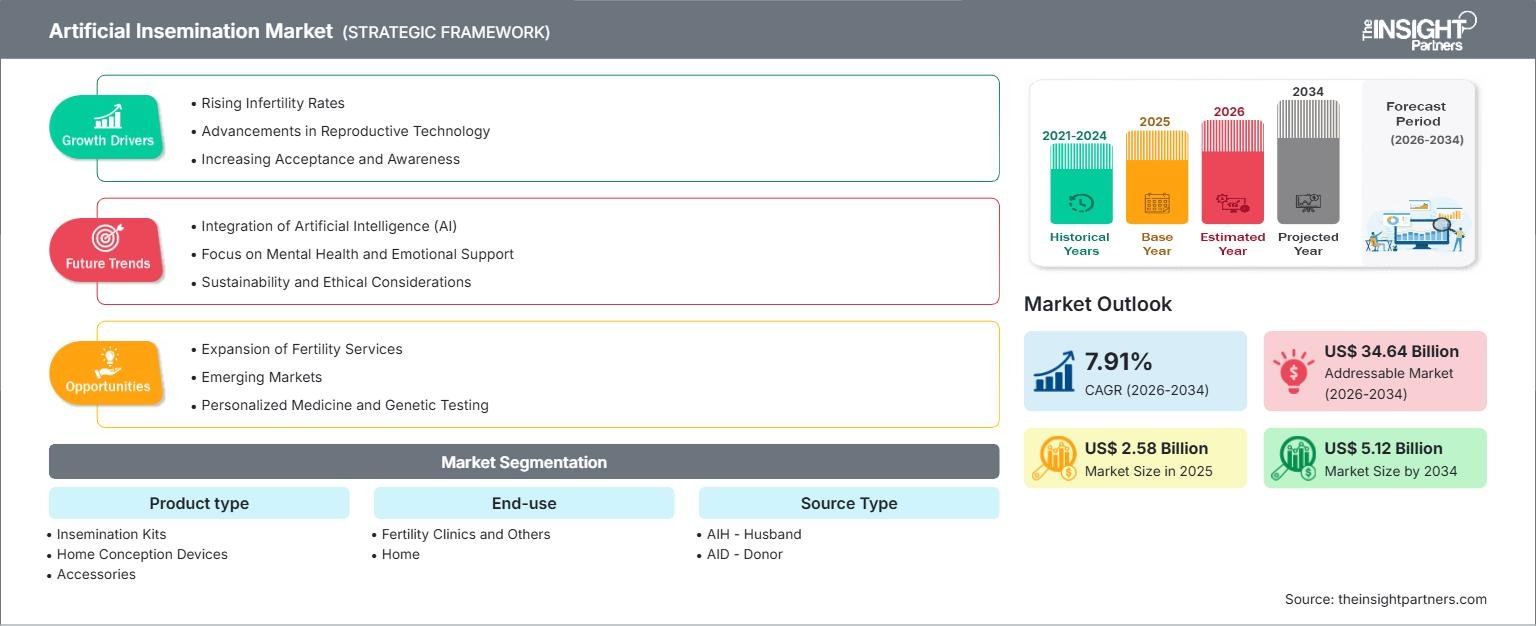
Artificial Insemination Market is projected to register a CAGR of 6.5% from 2025 to 2031, driven by rising infertility rates, advances in reproductive technology, and expanding access to fertility services
The global Artificial Insemination Market is experiencing continued growth as fertility awareness increases and healthcare providers expand access to assisted reproductive technologies. According to the latest analysis from The Insight Partners, the market is expected to register a 6.5% CAGR from 2025 to 2031. The report evaluates the market across product type, end use, source type, technique, and major geographic regions.
Artificial insemination involves introducing sperm into the female reproductive tract to support conception and is used across a range of fertility-care settings. Improvements in reproductive diagnostics, sperm preservation, insemination techniques, and fertility-clinic infrastructure are contributing to the development of the market.
Download Sample PDF @ https://www.theinsightpartners.com/sample/TIPRE00004561
Rising Infertility Rates Support Market Expansion
The increasing prevalence of infertility is one of the major factors driving demand for artificial insemination services and associated products. The Insight Partners identifies rising infertility rates as a key market driver, with lifestyle changes, environmental influences, and delayed childbearing contributing to growing fertility challenges.
The World Health Organization has estimated that infertility affects approximately 15% of couples, highlighting the substantial need for reproductive healthcare services. As more individuals and couples seek medical support for conception, fertility clinics are expanding their treatment portfolios and investing in technologies and products used during assisted reproductive procedures.
Growing awareness of infertility as a medical condition is also encouraging more patients to consult fertility specialists and explore available treatment pathways.
Advancements in Reproductive Technology Create New Opportunities
Technological developments are improving the efficiency of artificial insemination procedures. Advances in sperm preservation, diagnostic technologies, ultrasound, and hormone profiling allow healthcare professionals to better evaluate reproductive conditions and determine appropriate timing for insemination.
Cryopreservation has become an important component of reproductive medicine because sperm can be stored for extended periods under controlled conditions. Improvements in storage and handling technologies are supporting broader access to preserved reproductive material.
The integration of diagnostic technologies into fertility care is also helping clinicians develop more individualized treatment strategies. These developments are expected to support continued innovation across the Artificial Insemination Market.
Growing Acceptance of Assisted Reproductive Technologies
Greater awareness and changing social attitudes toward assisted reproductive technologies are influencing the market. Educational resources, fertility-awareness initiatives, and greater public discussion of infertility are helping reduce misconceptions surrounding fertility treatment.
The increasing availability of information enables prospective patients to understand different reproductive options and discuss appropriate approaches with healthcare professionals.
Fertility clinics are also expanding counseling and educational services as part of comprehensive treatment programs. This broader approach can help patients navigate the clinical and emotional aspects of fertility treatment.
Artificial Intelligence Emerges in Fertility Care
The integration of artificial intelligence (AI) represents an emerging trend in the Artificial Insemination Market. AI-based systems can process large datasets and identify patterns that may assist fertility specialists in evaluating treatment factors.
According to The Insight Partners, AI may support areas such as sperm selection, treatment timing, patient-data management, and individualized treatment planning.
As fertility clinics increasingly adopt digital technologies, AI-enabled analytical tools could become part of broader reproductive-health workflows. The development of data-driven fertility platforms may create opportunities for technology companies and healthcare providers specializing in reproductive medicine.
Personalized Fertility Care Gains Momentum
Personalized medicine is increasingly influencing reproductive healthcare. Genetic testing and individualized treatment approaches can provide additional information for patients and clinicians when considering reproductive options.
Genetic testing can help identify certain genetic conditions before conception and provide information that may support informed reproductive decisions. As genetic technologies become more accessible, fertility clinics may incorporate additional testing and personalized services into their treatment offerings.
The expansion of personalized fertility care creates opportunities for diagnostic companies, fertility-service providers, and technology developers serving the reproductive-health sector.
Mental Health and Emotional Support Become More Important
Infertility treatment can involve substantial emotional and psychological challenges. The market report identifies increasing attention to mental health and emotional support as an important future trend.
Fertility clinics are increasingly incorporating counseling, support groups, and other patient-support services into treatment programs. These services can complement clinical treatment by addressing the emotional challenges associated with infertility and assisted reproduction.
The development of comprehensive fertility-care models that combine medical treatment with counseling, nutrition guidance, stress management, and psychological support could create additional opportunities for service providers.
Expansion of Fertility Services Creates Market Opportunities
The expansion of fertility services represents a significant opportunity for market participants. Fertility clinics are increasingly offering comprehensive packages that may include fertility testing, counseling, treatment planning, and assisted reproductive procedures.
Additional services such as nutrition counseling, stress management, and mental-health support can further broaden the fertility-care ecosystem.
Emerging markets also provide opportunities for expansion. The Insight Partners highlights Asia Pacific, Latin America, and Africa as regions where improving healthcare infrastructure, increasing awareness of reproductive health, and investment by governments and private organizations could support fertility-service development.
Insemination Kits Represent a Key Product Segment
The Artificial Insemination Market is segmented by product type into Insemination Kits, Home Conception Devices, and Accessories. Insemination kits represented the leading product-type segment in 2023.
Insemination kits are used in clinical and assisted reproductive settings to support the administration of prepared sperm. Continued demand for fertility procedures is expected to support consumption of associated kits and accessories.
Home conception devices represent another developing product category, while accessories support various stages of fertility treatment and reproductive procedures.
Fertility Clinics Remain an Important End-Use Channel
By end use, the market is divided into Fertility Clinics and Others and Home. Fertility clinics remain central to the artificial insemination ecosystem because they provide diagnostic evaluation, treatment planning, insemination procedures, monitoring, and associated reproductive services.
The expansion of specialized fertility centers is therefore directly connected to market development. Improvements in healthcare infrastructure and increasing investment in reproductive medicine are supporting the establishment and expansion of fertility-care facilities in several regions.
Home-based fertility products also represent an emerging category as consumers seek greater convenience and accessibility for selected reproductive-health activities.
Intrauterine Insemination Holds an Important Role
Based on technique, the Artificial Insemination Market includes Intrauterine Insemination, Intracervical Insemination, Intravaginal Insemination, and Intratubal Insemination.
Intrauterine insemination is widely used within fertility-care settings and involves placing prepared sperm directly into the uterus around the time of ovulation. The technique is commonly integrated with fertility monitoring and related reproductive treatments.
Other insemination approaches serve different clinical circumstances and treatment requirements. The availability of multiple techniques allows fertility specialists to consider different approaches according to patient and treatment factors.
North America Leads the Regional Landscape
North America dominated the Artificial Insemination Market in 2023, according to The Insight Partners. The regional market benefits from established fertility-care infrastructure, access to reproductive technologies, specialist healthcare providers, and growing awareness of assisted reproductive options.
The regional analysis includes the US, Canada, and Mexico. The presence of specialized fertility clinics and advanced healthcare infrastructure supports the adoption of artificial insemination products and services.
Continued technological development and investments in reproductive medicine are expected to maintain market activity across the region.
Asia Pacific Presents Significant Growth Potential
Asia Pacific is emerging as an important opportunity area for artificial insemination providers. The regional analysis covers China, India, Japan, Australia, and other Asia Pacific markets.
Increasing awareness of reproductive health, improving healthcare infrastructure, and growing investment in fertility services are creating opportunities across the region.
India and China, in particular, represent large potential markets because of their extensive healthcare ecosystems and growing availability of specialized reproductive-health services.
Get Full Copy @ https://www.theinsightpartners.com/buy/TIPRE00004561
Competitive Landscape
The competitive landscape includes companies involved in fertility technologies, reproductive-health products, laboratory solutions, and home conception products. Companies profiled in The Insight Partners report include Nikon Instruments Inc., Genea Limited, Rinovum Women’s Health LLC, Pride Angel, Hi-Tech Solutions, Irvine Scientific, Kitazato Corporation, Clearblue (SPD Swiss Precision Diagnostics GmbH), Rocket Medical PLC, and Conceivex, Inc.
Market participants are developing products and technologies that address fertility testing, sperm handling, insemination procedures, reproductive monitoring, and patient convenience.
The competitive environment is also being shaped by digital technologies, personalized fertility services, and the expansion of fertility-care infrastructure.
Future Outlook
The global Artificial Insemination Market is projected to register a 6.5% CAGR from 2025 to 2031, reflecting continued demand for assisted reproductive services and related products.
Future market development is expected to be influenced by rising infertility rates, advances in reproductive technology, increasing public awareness, and the expansion of fertility services. AI-enabled fertility platforms, personalized medicine, genetic testing, and improved reproductive diagnostics are also creating new areas of technological development.
Emerging markets could provide additional opportunities as fertility-care infrastructure expands and reproductive-health awareness increases. At the same time, fertility providers are expected to place greater emphasis on comprehensive patient care, including counseling and emotional support.
As reproductive technologies continue to evolve, artificial insemination is expected to remain an important component of the broader fertility-care ecosystem, with technology providers, fertility clinics, diagnostic companies, and reproductive-health product manufacturers contributing to market development.
About Us
The Insight Partners, we provide comprehensive analysis and insights into market trends that empower businesses to make informed decisions. Our reports are designed to equip stakeholders with the necessary information to navigate the complexities of various industries, including healthcare, technology, and finance. We are dedicated to delivering high-quality research that enables our clients to achieve their strategic objectives.
Contact Us:
Contact Person: Ankit Mathur
E-mail: ankit.mathur@theinsightpartners.com
Phone: +1-646-491-9876
Also Available in : Korean German Japanese French Chinese Italian Spanish