Trauma Fixation Device Market Size to Reach US$ 17.45 Billion by 2033, Driven by Rising Fracture Cases
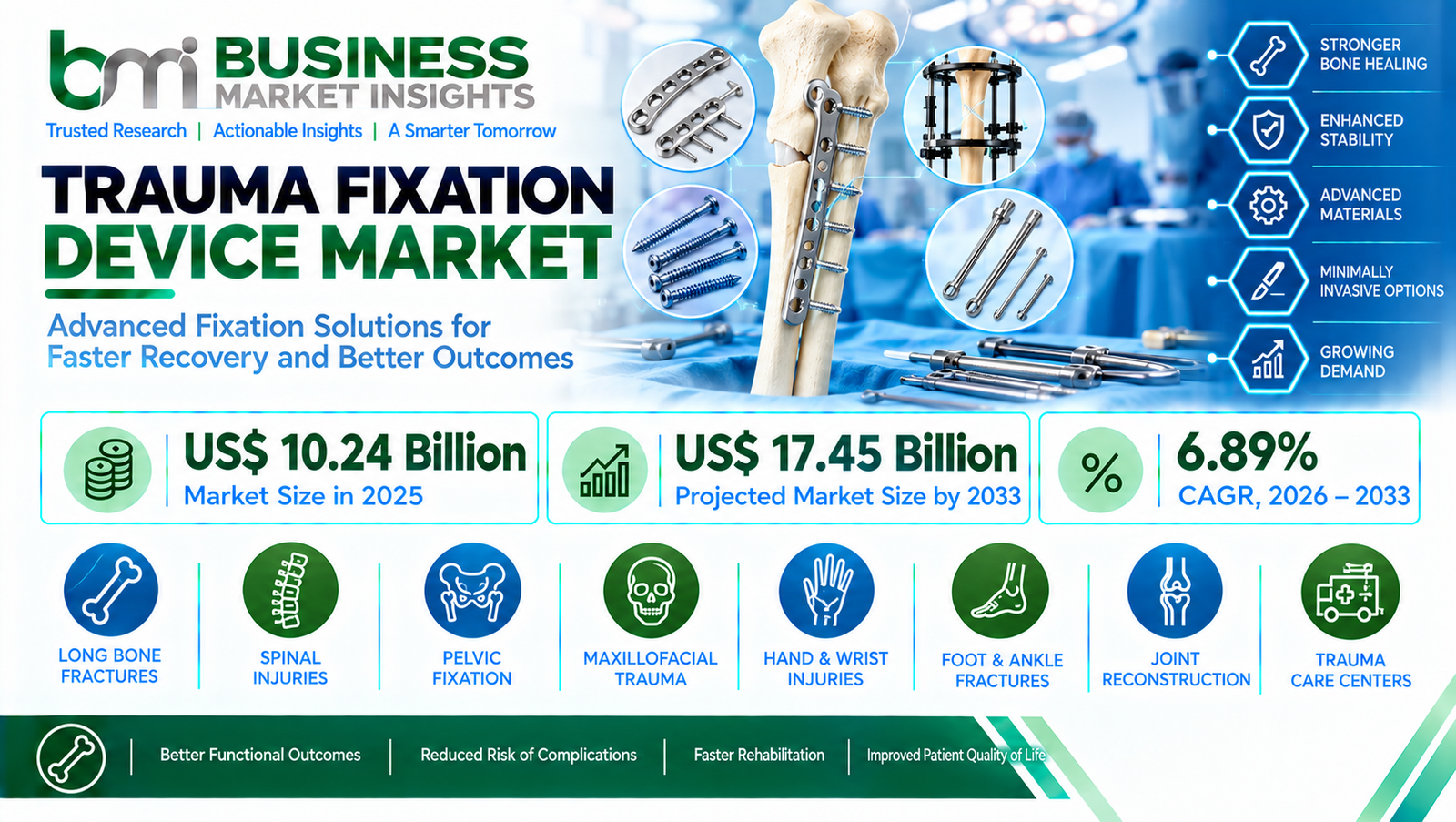
The Trauma Fixation Device Market size was valued at US$ 10.24 billion in 2025 and is projected to reach US$ 17.45 billion by 2033, growing at a CAGR of 6.89% during 2026–2033. Increasing road traffic accidents, sports-related injuries, industrial accidents, and age-related fractures are supporting market growth. Advancements in orthopedic implants, minimally invasive surgical techniques, patient-specific fixation devices, and biocompatible materials are creating opportunities for trauma fixation device manufacturers and healthcare providers.
Market Overview
The Trauma Fixation Device Market is evolving as healthcare providers increasingly adopt advanced orthopedic devices to stabilize fractures, support bone healing, and restore mobility. The market is segmented by Product into External Fixators (Unilateral and Bilateral, Circular, and Hybrid), Internal Fixators (Plates, Screws, and Nails), and Others; by Material into Stainless Steel, Titanium, and Others; by Site into Lower Extremities (Hip and Pelvic, Lower Leg, Knee, Foot and Ankle, and Thigh) and Upper Extremities (Hand and Wrist, Shoulder, Elbow, and Arm); and by End User into Hospitals, Ambulatory Surgical Centers, Orthopedic Centers, and Others.
North America benefits from advanced trauma care systems, established orthopedic facilities, and adoption of innovative fixation technologies. Europe is supported by established healthcare infrastructure and demand for high-performance orthopedic implants. Asia Pacific offers significant growth opportunities as healthcare facilities expand, trauma care improves, and demand for advanced fracture treatment increases.
Check valuable insights in the Trauma Fixation Device Market report. You can easily get a sample PDF of the report – https://www.businessmarketinsights.com/sample/BMIPUB00032562
Key Market Trends
Growing Adoption of Internal Fixation Devices
Internal fixation devices, including plates, screws, and nails, are widely used to stabilize fractures and support bone alignment. Their ability to provide mechanical stability and facilitate recovery is supporting demand across orthopedic trauma procedures. Continued improvements in implant design and surgical techniques are also expanding treatment options.
Increasing Use of Titanium and Advanced Materials
Titanium is gaining attention in orthopedic fixation because of its biocompatibility, corrosion resistance, and strength-to-weight ratio. Stainless steel remains important because of its established clinical use and cost considerations. Material innovation is helping manufacturers address the requirements of different fracture types and patient populations.
Advancements in 3D Printing and Patient-Specific Implants
Additive manufacturing is creating opportunities to develop customized orthopedic implants and fixation solutions. Patient-specific designs can improve anatomical fit in selected complex cases and support surgical planning. Continued development of manufacturing processes and clinical applications is contributing to innovation in trauma care.
Growing Focus on Minimally Invasive Trauma Surgery
Healthcare providers are increasingly adopting surgical approaches designed to reduce tissue disruption and support recovery. Improvements in implant design, instrumentation, and surgical techniques are helping clinicians manage selected fractures through less invasive procedures, creating opportunities for advanced fixation technologies.
Global Market Insights
The market is being shaped by rising trauma cases, growing demand for fracture treatment, advancements in orthopedic surgery, and increasing adoption of improved fixation materials. Trauma fixation devices are essential for managing fractures caused by road accidents, sports injuries, workplace incidents, and falls. These products help stabilize injured bones and support recovery across a wide range of orthopedic conditions.
The ecosystem includes orthopedic implant manufacturers, medical device companies, hospitals, ambulatory surgical centers, orthopedic centers, and specialized trauma care providers. Companies are prioritizing implant reliability, material performance, surgical efficiency, and product innovation to address evolving clinical requirements.
Internal fixators, including plates, screws, and nails, are important products because of their role in fracture stabilization and early mobilization. Titanium and other advanced materials support the development of specialized implants, while external fixation systems remain useful for selected complex fractures and injuries requiring external stabilization.
Explore the Trauma Fixation Device industry overview for additional market insights: https://www.businessmarketinsights.com/industry-overview/trauma-fixation-device-market
Regional Analysis
North America
North America benefits from advanced trauma care systems, established orthopedic facilities, and access to innovative medical technologies. Demand for internal and external fixation devices is supported by road traffic injuries, sports-related fractures, and the need for effective orthopedic treatment.
The United States represents an important market because of its developed healthcare infrastructure, specialized trauma centers, and adoption of advanced surgical technologies. Continued innovation in orthopedic implants and fracture management is creating opportunities for manufacturers.
Europe
Europe represents an important market, supported by established healthcare systems, orthopedic expertise, and demand for high-performance fixation devices. Healthcare providers are adopting advanced implant materials and surgical technologies to support fracture stabilization and improve patient outcomes.
Germany, France, the United Kingdom, Italy, and other European markets offer opportunities through orthopedic care, trauma treatment, and product innovation. Regulatory requirements and clinical evidence remain important considerations for manufacturers introducing new devices.
Asia Pacific
Asia Pacific offers significant growth opportunities, driven by expanding healthcare infrastructure, increasing access to orthopedic treatment, and demand for advanced trauma care. Road traffic accidents, sports injuries, and age-related fractures contribute to the need for effective fracture stabilization solutions.
China, India, Japan, South Korea, and other regional markets offer opportunities through hospital expansion, improvements in surgical capabilities, and increased access to orthopedic implants. Investments in healthcare facilities and trauma management are supporting regional market development.
Rest of the World
South and Central America, the Middle East, and Africa offer opportunities as healthcare infrastructure develops and access to specialized orthopedic treatment improves. Investments in hospitals, trauma units, and surgical facilities can support demand for internal and external fixation devices.
Market growth across these regions will depend on affordability, access to trained orthopedic surgeons, distribution networks, healthcare spending, and availability of advanced medical technologies.
Market Forecast by 2033
The Trauma Fixation Device Market is projected to increase from US$ 10.24 billion in 2025 to US$ 17.45 billion by 2033, reflecting a CAGR of 6.89% during 2026–2033.
Internal fixators, including plates, screws, and nails, remain important for fracture stabilization, while external fixation devices support selected complex injuries. Advances in titanium implants, patient-specific devices, and minimally invasive surgical techniques are expected to create opportunities for manufacturers. Hospitals will continue to play a central role, alongside ambulatory surgical centers and specialized orthopedic facilities.
Strategic Analysis
Companies operating in the market are focusing on implant innovation, advanced materials, surgical efficiency, and product development for different fracture types. Investments in titanium implants, improved fixation systems, and patient-specific solutions can help manufacturers address evolving clinical needs.
Strategic priorities include strengthening relationships with orthopedic surgeons and healthcare facilities, expanding product portfolios, improving manufacturing capabilities, and complying with regulatory requirements. Companies that combine product reliability, clinical evidence, and effective distribution are positioned to strengthen their competitive presence.
Market Drivers
Rising Incidence of Trauma and Road Traffic Accidents
Road traffic accidents, sports injuries, workplace incidents, and falls contribute to fracture cases requiring medical intervention. Increasing demand for fracture stabilization and orthopedic treatment is supporting the use of internal and external fixation devices.
Growing Aging Population and Age-Related Fractures
Older adults face a higher risk of fractures associated with falls and reduced bone strength. The need for orthopedic treatment and effective fracture management is supporting demand for fixation devices designed for different bone conditions and patient requirements.
Advancements in Orthopedic Surgery and Implant Materials
Improvements in implant design, surgical instruments, titanium materials, and minimally invasive techniques are supporting the development of advanced trauma fixation solutions. These technologies can help clinicians address complex fractures and improve the effectiveness of surgical treatment.
Market Opportunities
Development of Patient-Specific and 3D-Printed Implants
Advances in additive manufacturing create opportunities for customized fixation devices designed for complex anatomical requirements. Patient-specific implants and improved surgical planning tools may help support precision in selected orthopedic procedures.
Growing Demand for Advanced Titanium and Bioabsorbable Materials
The development of advanced materials offers opportunities to improve implant performance and address specific clinical needs. Titanium provides strength and biocompatibility, while bioabsorbable materials may be suitable for selected applications where gradual material degradation can be beneficial.
Expansion of Orthopedic Care in Emerging Markets
Healthcare infrastructure development and increased access to specialized trauma treatment create opportunities across emerging economies. Manufacturers can expand their reach through local partnerships, distribution networks, clinician education, and products suited to different healthcare budgets.
Market Restraints
High Costs of Advanced Implants and Surgical Procedures
Advanced titanium implants, specialized fixation systems, and surgical procedures can involve substantial costs. Budget constraints and limited access to reimbursement may affect adoption, particularly in healthcare systems with restricted resources.
Regulatory Requirements and Potential Clinical Complications
Orthopedic fixation devices must meet regulatory and clinical safety requirements. Product approval, testing, and compliance can increase development costs and extend commercialization timelines. Potential complications, including infection, implant failure, and metal sensitivity, also require careful clinical management.
Competitive Landscape
The competitive environment includes orthopedic implant manufacturers and medical technology companies competing through product innovation, implant materials, surgical solutions, and clinical support. Competition increasingly depends on device reliability, clinical performance, product breadth, surgeon relationships, and regulatory compliance.
Key players profiled in the report include:
· Stryker Corporation
· DePuy Synthes
· Zimmer Holdings, Inc.
· Smith & Nephew plc
· Wright Medical Inc.
· Medartis
· Globus Medical Inc.
· B. Braun Melsungen AG
· Orthofix US LLC
· Integra LifeSciences
Get Premium Research Report of Trauma Fixation Device Market Size and Growth Report by 2033 at: https://www.businessmarketinsights.com/buy/BMIPUB00032562
Conclusion
The Trauma Fixation Device Market is positioned for continued growth through 2033 as demand increases for fracture stabilization, advanced orthopedic implants, and effective trauma care. Rising injury rates, age-related fractures, improvements in implant materials, and advances in surgical techniques are creating opportunities for industry participants.
North America benefits from established trauma care infrastructure, while Asia Pacific offers growth opportunities through expanding healthcare access and orthopedic treatment capabilities. Companies that invest in advanced materials, patient-specific solutions, product reliability, and clinical collaboration are well positioned to address evolving fracture management needs.
Related Reading / Reports
1. Orthopedic Implants Market: Analysis of orthopedic implant products, clinical applications, regional demand, and market developments.
2. Bone Grafts and Substitutes Market: Analysis of bone graft materials, orthopedic applications, product developments, and market opportunities.
3. Orthopedic Devices Market: Analysis of orthopedic technologies, product categories, clinical applications, and industry growth.
4. External Fixators Market: Analysis of external fracture stabilization systems, clinical applications, product developments, and market demand.
About Us
Business Market Insights is a market research platform that provides subscription service for industry and company reports. Our research team has extensive professional expertise in domains such as Electronics & Semiconductor; Aerospace & Defense; Automotive & Transportation; Energy & Power; Healthcare; Manufacturing & Construction; Food & Beverages; Chemicals & Materials; and Technology, Media, & Telecommunications.
Contact us:
· If you have any questions about this report or would like further information, please contact us:
· Contact person: Ankit Mathur
· Email: sales@businessmarketinsights.com
· Phone: +16467917070