Asthma Devices Market to Reach US$ 59.35 Billion by 2034
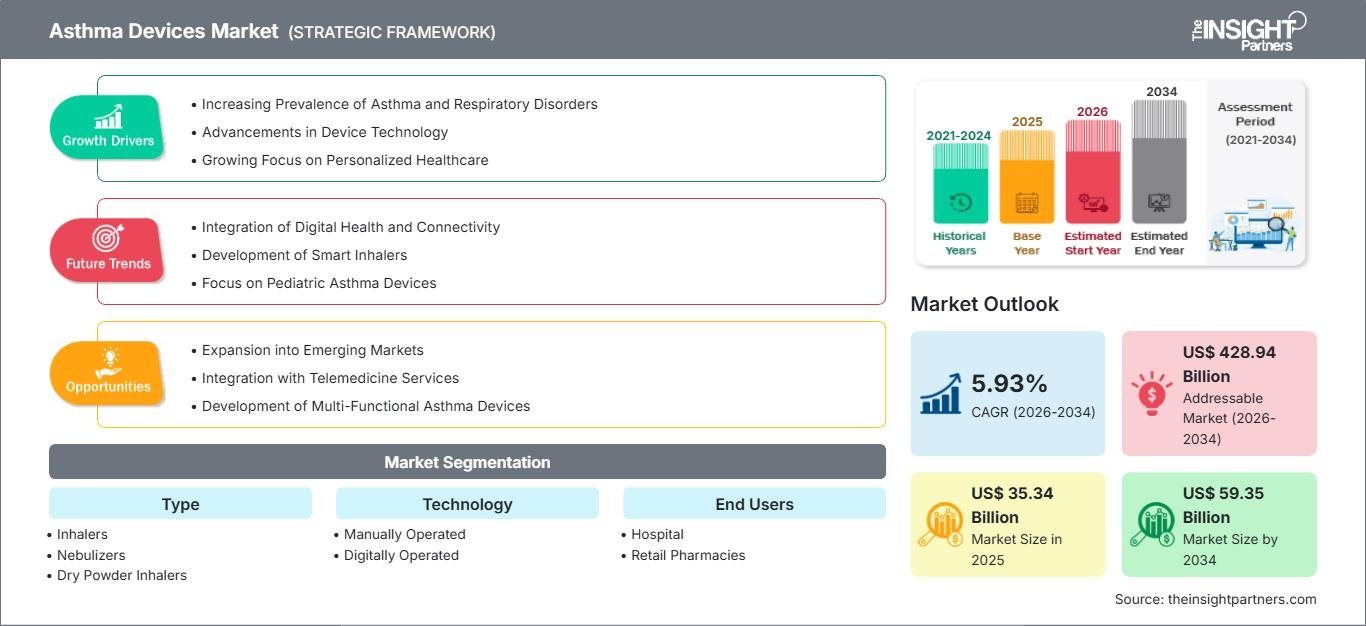
The Asthma Devices Market is projected to grow from US$ 35.34 billion in 2025 to US$ 59.35 billion by 2034, a CAGR of 5.93% over 2026-2034. Asthma devices support medication delivery, symptom control, and overall respiratory care for people with asthma and related conditions. The category covers inhalers, nebulizers, dry powder inhalers, metered-dose inhalers, and other respiratory treatment technologies. Rising demand for effective respiratory care, ongoing technological progress, and a stronger focus on patient-centered healthcare are driving growth. Manufacturers are investing in innovative, easy-to-use devices with digital monitoring and better medication delivery to meet the needs of clinicians and patients.
What is driving the Asthma Devices Market?
Rising demand for effective asthma management and respiratory care is a major force behind the market.
Asthma is a long-term respiratory condition marked by wheezing, coughing, chest tightness, and shortness of breath. Keeping it under control typically requires the right medication delivery, regular monitoring, and consistent adherence to a treatment plan. Inhalers and nebulizers are widely used to help patients take their medications as prescribed.
Growing awareness of respiratory health is also boosting demand. Clinicians and patients are paying closer attention to early diagnosis, symptom control, medication adherence, and long-term disease management. As a result, accessible and easy-to-use asthma devices are being adopted across hospitals, clinics, pharmacies, and home-care settings.
Technology is another key driver. Manufacturers are building more portable devices that are easier to administer and that support correct inhalation technique. Digitally enabled inhalers and connected respiratory monitoring tools are gaining interest because they let patients and healthcare professionals track medication use and adherence.
The growth of home healthcare and the need for respiratory treatment outside traditional clinical settings add further momentum. Affordability, availability, patient education, and healthcare infrastructure continue to shape adoption in different regions.
Download Sample PDF @ https://www.theinsightpartners.com/sample/TIPRE00018026
Which region leads the Asthma Devices Market?
North America is a major market for asthma devices, backed by mature healthcare infrastructure, strong access to respiratory treatments, and demand for advanced medical technologies.
The US drives much of this demand through its well-developed healthcare delivery systems, respiratory disease management programs, and distribution networks for medical devices and pharmaceuticals. Hospitals, clinics, retail pharmacies, and home healthcare providers make inhalers, nebulizers, and related technologies widely available. Continued interest in connected healthcare and patient-centered treatment also opens opportunities for device makers.
Europe is another significant market, supported by established healthcare systems, respiratory care services, and access to medical devices. Demand is shaped by healthcare spending, patient awareness, treatment accessibility, and the availability of advanced respiratory technologies. Manufacturers in the region must also comply with medical device regulations, quality requirements, and healthcare procurement practices.
Asia Pacific presents growth opportunities as healthcare infrastructure expands and access to respiratory diagnosis and treatment improves in many countries. Population growth, urbanization, air-quality concerns, and rising awareness of respiratory health are lifting demand for respiratory care solutions. Markets such as India, China, and Japan give manufacturers room to expand distribution, develop affordable products, and build stronger ties with hospitals, pharmacies, and healthcare providers.
Market conditions differ by region depending on healthcare spending, reimbursement systems, disease awareness, access to medical professionals, and the availability of suitable respiratory devices.
Which segment leads the Asthma Devices Market?
Inhalers are a leading segment because they are a widely used way to deliver prescribed respiratory medication straight to the airways.
Metered-dose inhalers release a measured amount of medication, while dry powder inhalers deliver medication as a powder that the patient inhales. The choice of device depends on the prescribed medicine, the patient’s age, their ability to use the device correctly, and their individual treatment needs. Both remain essential to asthma management in hospital, outpatient, and home-care settings.
Nebulizers also support market demand by turning liquid medication into a mist that is inhaled through a mouthpiece or mask. They can be a good option for patients who need a different delivery method or struggle with certain inhalers, with selection guided by clinical recommendations and patient-specific needs.
Technology further shapes the market. Manually operated devices continue to meet established treatment needs, while digitally enabled devices create opportunities for better medication tracking and patient engagement. Smart inhalers may include sensors or connected features that support adherence monitoring and communication with healthcare providers.
By end user, the market includes hospitals, retail pharmacies, clinics, and home-care settings. Hospitals and clinics handle diagnosis and treatment, while pharmacies and home healthcare channels give patients access to prescribed devices and ongoing respiratory care products. The growing emphasis on convenient treatment and self-management is pushing manufacturers to design products that improve usability, portability, and adherence.
Which companies are prominent in the Asthma Devices Market?
Competition in the market is shaped by product innovation, manufacturing capability, device reliability, regulatory compliance, pricing, and distribution reach.
Key industry participants profiled in the market include:
- GlaxoSmithKline plc
- Merck & Co., Inc.
- Aristopharma Ltd.
- 3M
- SRS Pharmaceuticals Pvt. Ltd.
- AstraZeneca
- Baxter
- Boehringer Ingelheim GmbH
- Koninklijke Philips N.V.
- Teva Pharmaceutical Industries Ltd.
These companies span pharmaceuticals, respiratory healthcare, medical devices, and related treatment technologies. Their market positions rest on product portfolios, R&D capabilities, manufacturing quality, commercial partnerships, and access to domestic and international healthcare markets.
Product development and device usability are key competitive areas. Manufacturers are working to improve medication delivery, portability, patient convenience, and compatibility with evolving respiratory care needs. Companies in connected respiratory technology are also exploring digital features that help patients and clinicians monitor medication use and support adherence.
Consistent manufacturing, quality assurance, and regulatory compliance are essential for suppliers of respiratory medical devices. Partnerships with healthcare providers, pharmacies, distributors, and digital health organizations can also help manufacturers grow their presence and respond to changing patient needs.
The competitive landscape includes established pharmaceutical companies, medical device manufacturers, and specialized respiratory technology providers. Those that combine dependable quality with innovation, accessibility, and strong distribution networks may be best placed to meet evolving respiratory healthcare requirements.
What is changing in the Asthma Devices Market in 2026?
In 2026, the market is being shaped by growing interest in connected respiratory care, patient-friendly device designs, and better treatment adherence.
Digital health technologies are drawing attention as providers look for better ways to support patients with chronic respiratory conditions. Smart inhalers and connected monitoring tools may record aspects of medication use and offer reminders or information that keep patients engaged. Their practical value depends on device capabilities, clinical suitability, affordability, and how well they fit into healthcare workflows.
Usability is another major focus. Inhaler technique affects how effectively medication is delivered, so patient education and the right device choice are important parts of asthma management. Manufacturers are prioritizing convenient administration, portability, and designs that suit a range of patient needs.
Home healthcare is also influencing the market. Patients increasingly need respiratory care products they can use outside hospitals with appropriate clinical guidance. Portable nebulizers, inhalers, and other respiratory devices can support this shift, depending on individual treatment plans.
On the supply side, manufacturers face expectations around product quality, reliable distribution, regulatory compliance, and affordability. Companies developing connected devices must also address data privacy, cybersecurity, and the reliability of digital features. Attention to these factors is likely to shape product development and commercial strategies across the market.
Get Full Copy @ https://www.theinsightpartners.com/buy/TIPRE00018026
What are the major investment opportunities in the Asthma Devices Market?
Opportunities are emerging in smart inhaler technologies, advanced nebulizers, respiratory monitoring solutions, and the expansion of affordable respiratory healthcare products.
Manufacturers may find openings in devices that improve usability, portability, and medication administration. Patient-focused innovation can address practical challenges around device handling and treatment adherence. Investment in R&D, manufacturing quality, and regulatory capabilities can also strengthen long-term competitiveness.
Digital respiratory healthcare is another potential growth area. Connected inhalers and monitoring technologies may enable collaboration among device manufacturers, healthcare providers, pharmaceutical companies, and digital health businesses. Solutions that build useful monitoring features into routine respiratory care may support better-informed treatment conversations between patients and clinicians.
Expansion into emerging markets also offers promise. Better access to affordable respiratory devices through pharmacies, hospitals, clinics, and established distributors can help manufacturers reach underserved patients. Local manufacturing, regional partnerships, and cost-conscious product development may widen market access where infrastructure and regulations allow.
Investment in home healthcare and patient education is another important opportunity. Products that are easy to use, backed by clear instructions and appropriate clinical guidance, can support respiratory disease management outside traditional hospital settings.
Through 2034, demand for respiratory treatment solutions, continued advances in medical device technology, and wider healthcare access are expected to drive growth in the Asthma Devices Market.
Related Reports –
Asthma Inhaler Device Market Growth, Share & Trends by 2034
About Us
The Insight Partners, we provide comprehensive analysis and insights into market trends that empower businesses to make informed decisions. Our reports are designed to equip stakeholders with the necessary information to navigate the complexities of various industries, including healthcare, technology, and finance. We are dedicated to delivering high-quality research that enables our clients to achieve their strategic objectives.
Contact Us:
Contact Person: Ankit Mathur
E-mail: ankit.mathur@theinsightpartners.com
Phone: +1-646-491-9876
Also Available in : Korean German Japanese French Chinese Italian Spanish