Digestive System Drugs Market worth US$ 88.78 billion by 2034
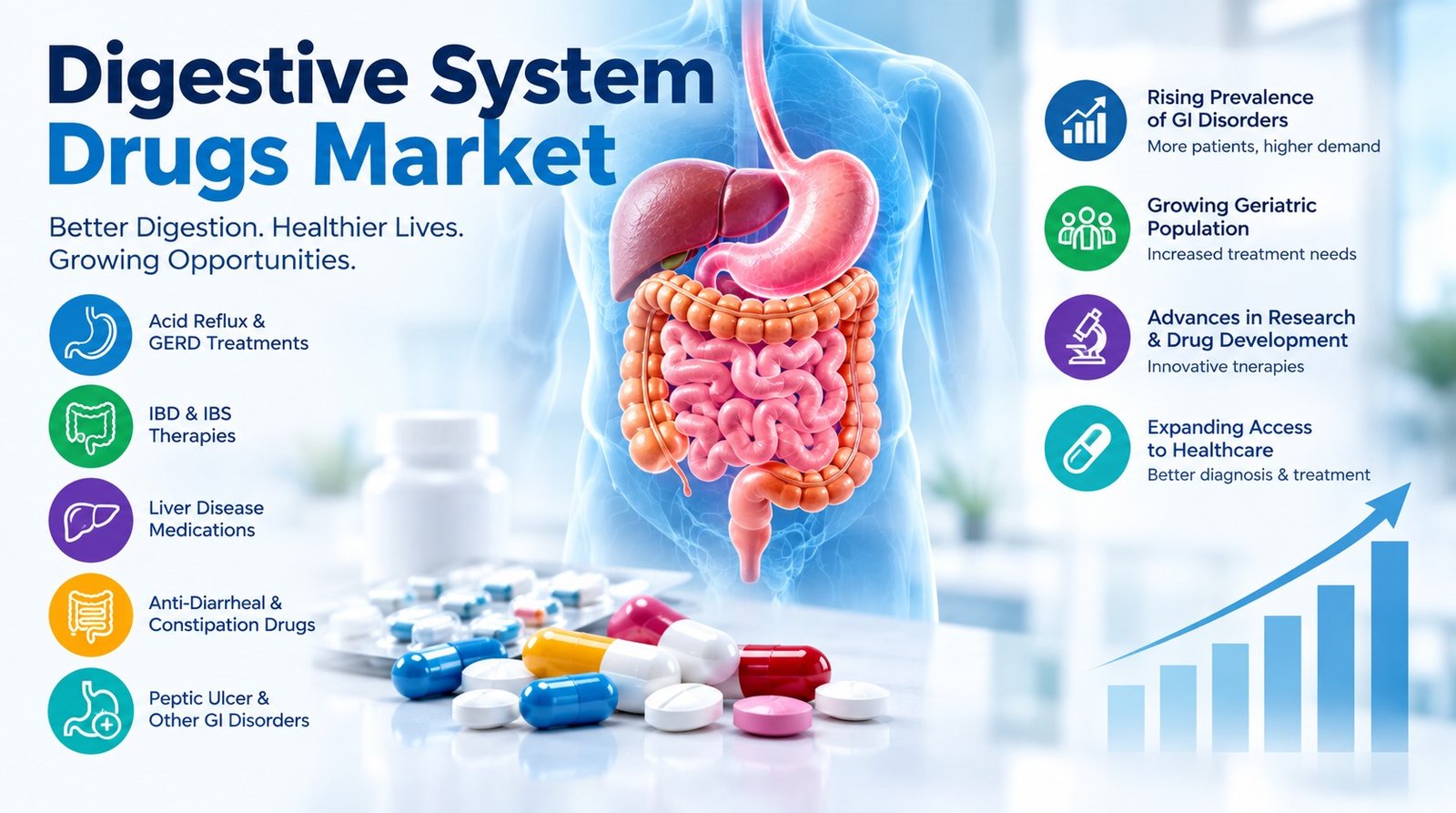
The Digestive System Drugs Market is expanding as gastrointestinal disorders become more prevalent worldwide and healthcare systems place greater emphasis on effective pharmacological treatment. Digestive system drugs include a broad range of therapies that manage conditions affecting the gastrointestinal tract, including acid-related disorders, inflammatory bowel diseases, constipation, diarrhea, irritable bowel syndrome, gastrointestinal infections, and other digestive disorders. Growing disease awareness, improved diagnosis, and advances in targeted therapies are supporting demand across the pharmaceutical industry.
The Digestive System Drugs Market was valued at US$ 59.11 billion in 2025 and is expected to reach US$ 88.78 billion by 2034, registering a CAGR of 4.62% during 2026–2034. Increasing healthcare expenditure, an aging population, changing dietary patterns, sedentary lifestyles, and the growing incidence of chronic gastrointestinal conditions are contributing to market expansion. Pharmaceutical companies are also focusing on developing therapies that provide improved efficacy, safety, and long-term disease management.
Rising Prevalence of Gastrointestinal Disorders
The increasing prevalence of digestive disorders is a major factor supporting the growth of the Digestive System Drugs Market. Gastrointestinal conditions can affect individuals across different age groups and range from temporary digestive problems to chronic diseases requiring long-term treatment.
Conditions such as gastroesophageal reflux disease, peptic ulcers, irritable bowel syndrome, inflammatory bowel disease, constipation, and other gastrointestinal disorders are driving demand for prescription and supportive therapies. Increased awareness of digestive health is also encouraging patients to seek medical attention earlier, supporting diagnosis and treatment rates.
Download Sample PDF: https://www.theinsightpartners.com/sample/TIPRE00021566
Growing Demand for Advanced Gastrointestinal Therapies
Pharmaceutical innovation is creating new opportunities within digestive disease treatment. Conventional therapies continue to represent an important part of gastrointestinal care, while newer targeted approaches are being developed for patients with chronic and complex conditions.
Biologic therapies and targeted medicines have become increasingly important in the treatment of inflammatory gastrointestinal diseases. These therapies can target specific inflammatory pathways and provide treatment options for patients who may not achieve adequate outcomes with conventional medicines.
The development of orally administered therapies, extended-release formulations, combination treatments, and more targeted therapeutic approaches is also helping pharmaceutical companies address diverse patient requirements.
Impact of Lifestyle and Dietary Changes
Lifestyle and dietary factors are contributing to the growing burden of several digestive disorders. Changes in eating habits, increased consumption of processed foods, inadequate physical activity, stress, and other lifestyle factors can influence gastrointestinal health.
As urbanization and changing lifestyles continue across emerging and developed economies, healthcare providers are placing greater emphasis on digestive health management. This trend is supporting demand for pharmaceutical products that help manage both acute and chronic digestive conditions.
Pharmaceutical Industry Investments
Leading pharmaceutical companies are strengthening their presence in digestive disease treatment through product development, clinical research, strategic collaborations, and portfolio expansion. Prominent companies operating in the Digestive System Drugs Market include Takeda Pharmaceutical Company Limited; AstraZeneca PLC; Novartis AG; Pfizer Inc.; Sanofi S.A.; Eli Lilly and Company; Novo Nordisk A/S; Johnson & Johnson; AbbVie Inc.; Bayer AG; GlaxoSmithKline plc; and Merck & Co., Inc.
These companies are focusing on different therapeutic areas within digestive health, including inflammatory conditions, metabolic disorders, gastrointestinal cancers, acid-related disorders, and other digestive diseases. Strategic partnerships and investments in research and development are enabling companies to expand their therapeutic pipelines and address unmet treatment needs.
Increasing Focus on Personalized Treatment
Personalized medicine is emerging as an important area of development in gastrointestinal healthcare. Differences in disease mechanisms, patient characteristics, treatment response, and genetic or molecular profiles can influence therapeutic outcomes.
Advances in biomarkers, molecular diagnostics, and patient stratification are helping researchers identify patient groups that may benefit from specific treatment approaches. This trend is particularly relevant to complex gastrointestinal diseases where treatment response can vary significantly between patients.
The integration of precision medicine approaches with pharmaceutical development could support the introduction of more targeted therapies and improve treatment strategies for selected patient populations.
Technological Advancements in Drug Development
Technological advancements are influencing the discovery and development of digestive system drugs. Artificial intelligence, machine learning, computational biology, and advanced clinical trial technologies are increasingly being applied to identify potential drug candidates, analyze clinical data, and understand disease mechanisms.
These technologies can help pharmaceutical companies improve research efficiency and identify new therapeutic targets. Digital health technologies and remote patient monitoring can also provide additional information about treatment outcomes and patient behavior, supporting more data-driven approaches to gastrointestinal disease management.
Opportunities in Emerging Markets
Emerging economies represent significant opportunities for the Digestive System Drugs Market as healthcare infrastructure improves and access to pharmaceutical products expands. Growing healthcare expenditure, increasing insurance coverage, improved diagnostic capabilities, and rising awareness of gastrointestinal disorders are supporting treatment adoption.
The expansion of healthcare facilities and pharmaceutical distribution networks is also improving access to digestive disease therapies in developing regions. Companies that strengthen local partnerships and expand product availability can address the growing demand for gastrointestinal treatments across these markets.
Purchase a Copy of this report: https://www.theinsightpartners.com/buy/TIPRE00021566
Future Outlook
The Digestive System Drugs Market is expected to maintain steady growth through 2034, supported by the increasing prevalence of gastrointestinal disorders, pharmaceutical innovation, and expanding access to healthcare. The development of targeted therapies, biologics, personalized treatment approaches, and technology-enabled drug discovery is expected to create additional opportunities for industry participants.
As pharmaceutical companies continue investing in research and development, the competitive landscape is likely to evolve around therapeutic innovation, clinical efficacy, patient outcomes, and differentiated treatment approaches. Growing awareness of digestive health and the need for effective long-term management of chronic gastrointestinal conditions will further support market development.
Also Available in: Korean | German | Japanese | French | Chinese | Italian | Spanish
Related Reports:
Dental Pain Management Market Trends, Size & Forecast by 2034
Colistin Market Demand, Size & Forecast by 2034
About Us
The Insight Partners is a one-stop provider of actionable industry research and intelligence. We help our clients get solutions to their research requirements through our syndicated and consulting research services. We specialize in industries such as Semiconductor and Electronics, Aerospace and Defense, Automotive and Transportation, Healthcare IT, Manufacturing and Construction, Medical Devices, Technology, Media and Telecommunications, Food and Beverages, Consumer Goods, and Chemicals and Materials.
Contact US
Contact Person: Ankit Mathur
Phone: +1-646-491-9876
E-mail : sales@theinsightpartners.com