Digital Radiography in Chest Radiography Market will Reach US$ 41.93 billion by 2034
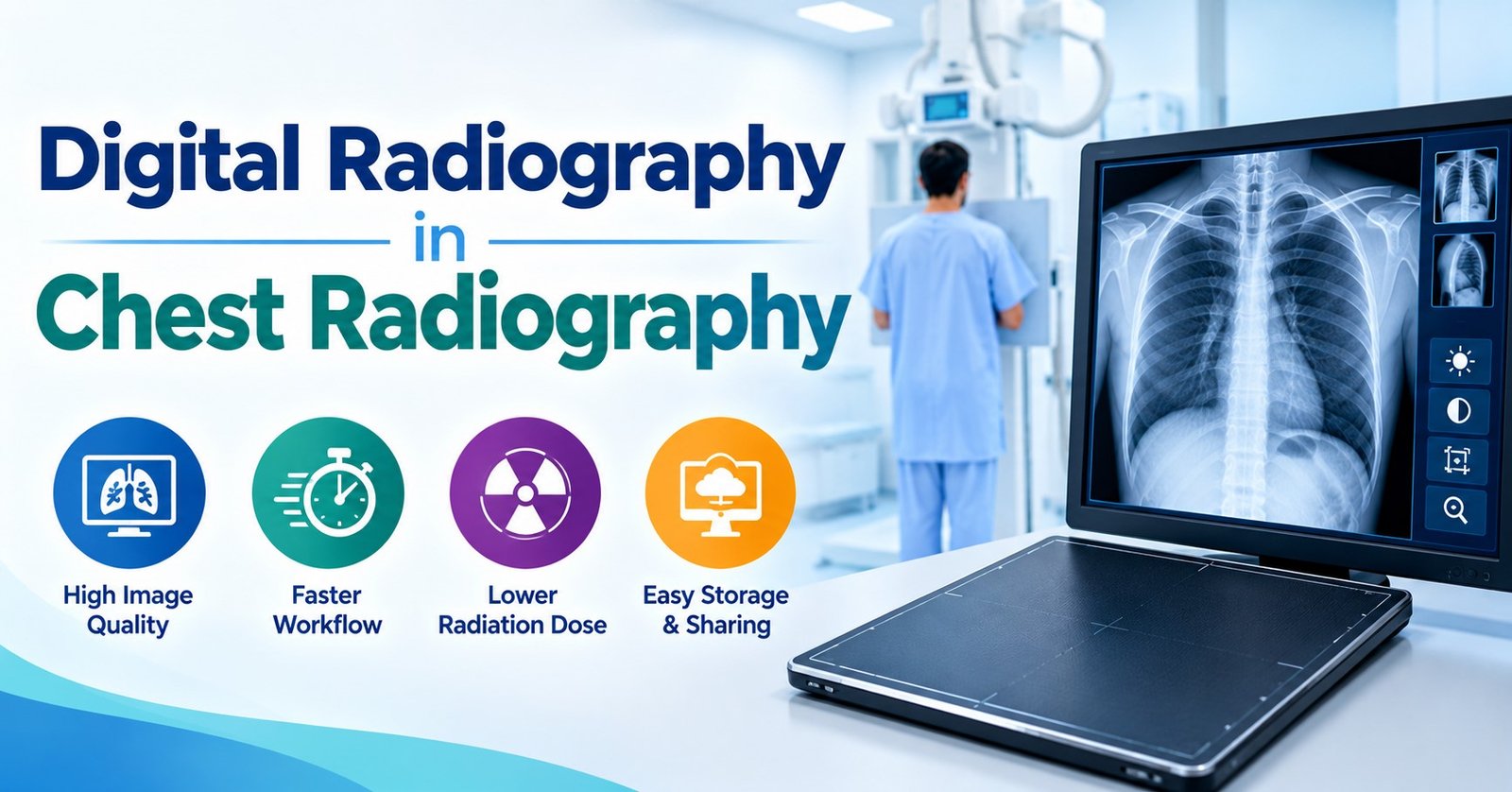
The Digital Radiography in Chest Radiography Market is becoming increasingly important as hospitals, diagnostic imaging centers, and healthcare providers adopt faster and more efficient X-ray technologies. The market was valued at US$ 26.68 billion in 2025 and is projected to reach US$ 41.93 billion by 2034, expanding at a CAGR of 5.81% from 2026 to 2034. Growing demand for chest imaging, increasing healthcare expenditure, technological advancements in digital X-ray systems, and the transition from conventional film-based imaging to digital workflows are supporting market expansion.
Digital Radiography enables healthcare professionals to capture, process, store, and transmit chest X-ray images electronically. The technology supports rapid diagnosis and integration with hospital information systems and picture archiving and communication systems (PACS). The increasing prevalence of respiratory diseases, cardiovascular conditions, and infectious diseases is further creating demand for digital chest radiography, particularly in high-volume clinical environments.
What Is Driving the Digital Radiography in Chest Radiography Market?
The growing requirement for efficient diagnostic imaging is one of the primary factors supporting market development. Chest X-rays are among the most frequently performed medical imaging examinations, making workflow efficiency particularly important for hospitals and diagnostic centers.
Major Digital Radiography Market trends include:
- Increasing demand for rapid imaging: Digital systems provide immediate image availability compared with traditional film-based workflows.
- Growing respiratory disease burden: Conditions such as pneumonia, chronic obstructive pulmonary disease, and other pulmonary disorders require chest imaging for diagnosis and monitoring.
- Healthcare digitization: Electronic image storage and digital data exchange are becoming standard components of modern healthcare infrastructure.
- Improved image quality: Advanced detectors and image-processing technologies can enhance visualization while supporting efficient examinations.
- Portable imaging adoption: Mobile digital X-ray systems are increasingly useful in intensive care units, emergency departments, and bedside examinations.
Download Sample PDF: https://www.theinsightpartners.com/sample/TIPRE00023280
How Is Digital Technology Transforming Chest X-Ray Imaging?
The transition from conventional radiography to digital imaging is changing the economics and workflow of chest diagnostics. Digital X-ray systems eliminate the need for film processing and allow images to be reviewed shortly after acquisition. This can help clinicians make faster decisions in emergency and critical-care environments.
Modern systems can also integrate with PACS and electronic medical records, enabling images to be accessed across departments. For healthcare providers, this connectivity can reduce physical storage requirements and improve collaboration between radiologists, physicians, and specialists.
Another important development is the integration of artificial intelligence (AI). AI-based image analysis can assist radiologists by identifying potentially abnormal findings and prioritizing examinations requiring further review. While AI is generally positioned as a decision-support technology rather than a replacement for clinical expertise, its integration could increase the value of digital chest imaging platforms.
Why Is Portable Digital Radiography Gaining Attention?
Portable and mobile digital radiography equipment is becoming increasingly relevant for healthcare facilities treating patients who cannot easily be transported to conventional imaging departments. Intensive care units, emergency rooms, operating rooms, and isolation areas can benefit from bedside imaging.
Wireless detectors and battery-powered systems can provide greater flexibility than fixed installations. These systems are particularly valuable when rapid imaging is required or when minimizing patient movement is clinically important.
From a commercial perspective, demand for mobile systems creates opportunities for manufacturers to develop lightweight equipment, longer-lasting batteries, wireless connectivity, improved detector durability, and automated image-processing capabilities.
What Role Does Image Quality Play in Market Growth?
Image quality remains a fundamental consideration in the adoption of chest radiography systems. Healthcare providers require systems capable of producing consistent diagnostic images while supporting efficient examination protocols.
Technological development is focusing on detector sensitivity, image-processing algorithms, exposure optimization, and workflow automation. Improvements in these areas can help radiology departments standardize imaging procedures across different operators and locations.
Manufacturers are also investing in ergonomic designs and user-friendly interfaces. These features can reduce workflow complexity and make advanced radiography technologies more accessible to hospitals, outpatient centers, and diagnostic laboratories.
Which Regions Offer Growth Opportunities?
North America represents an important region for the Digital Radiography in Chest Radiography Market, supported by developed healthcare infrastructure, widespread adoption of advanced medical imaging equipment, and continued investment in hospital modernization. Replacement demand for older radiography equipment also contributes to opportunities for technology providers.
Europe benefits from established healthcare systems and increasing emphasis on digital healthcare infrastructure. Hospitals and diagnostic centers are adopting modern imaging systems to improve workflow efficiency and interoperability.
Asia-Pacific presents significant opportunities as healthcare infrastructure expands and diagnostic imaging becomes more accessible. Increasing hospital construction, rising healthcare expenditure, and growing demand for advanced medical technologies are supporting the adoption of digital radiography equipment across developing healthcare markets.
Emerging economies can provide opportunities for manufacturers offering cost-efficient, portable, and scalable imaging solutions.
Who Are the Key Companies in the Digital Radiography Market?
The competitive landscape includes global medical imaging companies and specialized radiography manufacturers. Prominent companies include:
- GE HealthCare Technologies Inc.
- Siemens Healthineers AG
- Koninklijke Philips N.V.
- Agfa-Gevaert NV
- FUJIFILM Holdings Corporation
- Angell Technology Co., Ltd.
- Carestream Health, Inc.
- Beijing Wandong Medical Technology Co., Ltd.
- Canon Inc.
- Konica Minolta, Inc.
- Samsung Electronics Co., Ltd.
- Shimadzu Corporation
- Shenzhen Mindray Bio-Medical Electronics Co., Ltd.
- Source-Ray, Inc.
- Hitachi, Ltd.
Competition is increasingly centered on detector technology, portable systems, image-processing capabilities, workflow integration, connectivity, and product reliability. Companies are also exploring AI-enabled applications and solutions designed to support more efficient radiology workflows.
Purchase a Copy of this report: https://www.theinsightpartners.com/buy/TIPRE00023280
What Is the Future Outlook for Digital Chest Radiography?
The Digital Radiography in Chest Radiography Market is expected to benefit from continued healthcare digitization and increasing demand for rapid diagnostic imaging. The market’s projected growth from US$ 26.68 billion in 2025 to US$ 41.93 billion by 2034, at a 5.81% CAGR during 2026–2034, reflects sustained commercial opportunities across equipment upgrades, portable imaging, detector technologies, and software-enabled diagnostic workflows.
Future opportunities are likely to emerge around:
- AI-assisted chest image interpretation
- Wireless and portable X-ray systems
- Advanced flat-panel detectors
- Cloud-connected imaging workflows
- Dose optimization technologies
- PACS and electronic health record integration
- Automated image enhancement and processing
As healthcare providers seek to improve diagnostic speed, operational efficiency, and access to medical imaging, digital chest radiography is positioned to remain an important component of modern radiology infrastructure. The combination of hardware innovation, software intelligence, connectivity, and portable imaging capabilities is expected to shape the next phase of development in the Digital Radiography in Chest Radiography Market.
Also Available in: Korean | German | Japanese | French | Chinese | Italian | Spanish
Related Reports:
Forced Oscillometry Market Demand, Trends & Forecast by 2034
Impulse Oscillometry Market Share, Growth & Forecast by 2034
About Us
The Insight Partners is a one-stop provider of actionable industry research and intelligence. We help our clients get solutions to their research requirements through our syndicated and consulting research services. We specialize in industries such as Semiconductor and Electronics, Aerospace and Defense, Automotive and Transportation, Healthcare IT, Manufacturing and Construction, Medical Devices, Technology, Media and Telecommunications, Food and Beverages, Consumer Goods, and Chemicals and Materials.
Contact US
Contact Person: Ankit Mathur
Phone: +1-646-491-9876
E-mail : sales@theinsightpartners.com