Diagnostic Enzymes Market worth US$ 8.72 Billion by 2034 | The Insight Partners
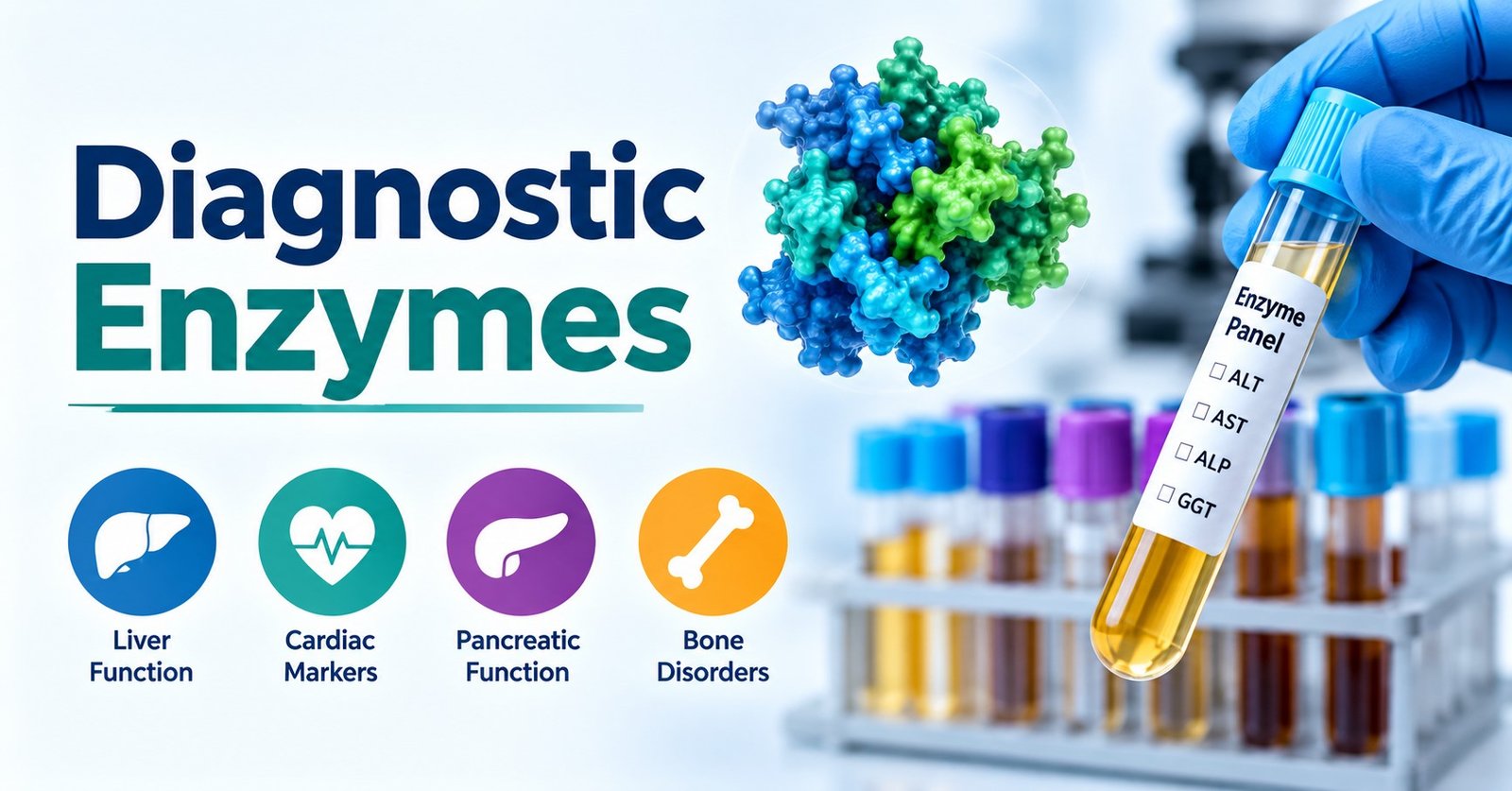
The Global Diagnostic Enzymes Market is gaining strategic importance as healthcare providers, diagnostic laboratories, and biotechnology companies increasingly prioritize accurate, rapid, and scalable disease detection. The market was valued at US$ 5.84 billion in 2025 and is projected to reach US$ 8.72 billion by 2034, expanding at a CAGR of 4.56% during 2026–2034. Diagnostic enzymes support multiple testing workflows, including clinical chemistry and molecular diagnostics, making them an important component of the broader in vitro diagnostics ecosystem.
The rising burden of chronic diseases, infectious conditions, and metabolic disorders is increasing demand for laboratory testing. At the same time, technological improvements are enabling enzyme-based assays to deliver greater analytical precision and workflow efficiency. Current industry research also identifies clinical enzymes, molecular diagnostics, laboratory automation, and point-of-care testing as important areas shaping market development.
What Is Driving the Diagnostic Enzymes Market Growth?
One of the strongest growth factors is the increasing need for early and reliable disease detection. Enzymes can facilitate biochemical reactions used to identify or quantify specific biological substances, supporting diagnostic applications across multiple disease categories.
Key growth drivers include:
- Increasing chronic disease burden: Diabetes, cardiovascular disorders, cancer, and metabolic conditions require continuous diagnostic monitoring.
- Expansion of molecular diagnostics: Enzymes such as polymerases and nucleases play important roles in amplification and molecular testing workflows.
- Laboratory automation: Automated clinical chemistry systems are increasing testing throughput while emphasizing reproducibility and operational efficiency.
- Growth of point-of-care testing: Decentralized testing creates demand for stable, sensitive, and easy-to-use diagnostic reagents.
- Technological advancement: Enzyme engineering and improved formulations can enhance assay performance, stability, and application flexibility.
Industry data indicates that clinical enzymes remain particularly important because of their extensive use in clinical chemistry, while molecular applications are attracting additional investment as PCR and other nucleic-acid-based technologies expand.
Download Sample PDF: https://www.theinsightpartners.com/sample/TIPRE00040130
How Are Clinical and Molecular Applications Shaping the Market?
The Diagnostic Enzymes Market can be analyzed across enzyme type, application, and end user. The major application categories include clinical chemistry, molecular diagnostics, and other applications, while key end users include hospitals and clinical laboratories.
Clinical chemistry remains a significant commercial opportunity because enzyme-based testing is integrated into routine laboratory workflows. Enzymes can support the measurement of biomarkers and metabolites in biological samples, helping laboratories evaluate organ function and monitor disease progression.
Molecular diagnostics represents another important opportunity. Polymerases, nucleases, and related enzymes are essential to several nucleic-acid testing techniques. As molecular testing becomes more accessible and automated, suppliers have opportunities to develop enzymes with improved specificity, thermal stability, reaction efficiency, and compatibility with high-throughput platforms.
Which Enzyme Types Offer Commercial Opportunities?
The market includes several enzyme categories, each addressing different diagnostic requirements. According to The Insight Partners, major segments include polymerases and nucleases, carbohydrases, proteases, oxidases, and other enzyme types.
From a business perspective, opportunities are emerging around:
- Polymerases and nucleases: Supported by molecular diagnostic and nucleic-acid amplification applications.
- Oxidases: Used in biochemical and clinical chemistry testing.
- Proteases: Relevant to specialized analytical and diagnostic applications.
- Carbohydrases: Used in assays involving carbohydrate-related biomarkers and metabolic analysis.
- Specialized enzymes: Offer opportunities for customized diagnostic platforms and emerging testing technologies.
The commercial value of these segments depends not only on enzyme consumption but also on purity, reproducibility, stability, formulation, regulatory compliance, and compatibility with automated instruments.
What Role Does Automation Play in Market Development?
Automation is changing the economics of laboratory diagnostics. High-throughput laboratories increasingly require integrated systems that can process large numbers of samples while maintaining consistency and reducing manual intervention. Siemens Healthineers, for example, highlights efficiency, reliability, accuracy, and workflow consolidation in its clinical chemistry systems.
For enzyme suppliers, this trend creates opportunities to provide reagents designed specifically for automated platforms. Enzymes that offer longer shelf life, consistent batch performance, rapid reaction kinetics, and compatibility with automated workflows can provide commercial advantages.
The integration of diagnostics with software, laboratory information systems, and data analytics is also increasing the importance of standardized reagent performance. Roche, for instance, describes its diagnostics portfolio as combining in-vitro tests, instruments, digital solutions, laboratory automation, and clinical decision support.
Which Regions Are Creating New Opportunities?
North America remains an important market because of its advanced laboratory infrastructure, high adoption of diagnostic technologies, and strong healthcare spending. Current industry estimates also identify North America as a leading regional market for diagnostic enzymes.
Europe represents another established market, supported by sophisticated healthcare systems, laboratory networks, and regulatory emphasis on diagnostic quality.
Asia-Pacific presents substantial expansion opportunities as healthcare infrastructure improves, diagnostic testing becomes more accessible, and investments in biotechnology and laboratory capacity increase. Industry analysis identifies Asia-Pacific as one of the faster-growing regional markets during the forecast period.
For manufacturers, emerging Asian markets can provide opportunities for localized production, distribution partnerships, and affordable diagnostic solutions.
Who Are the Key Companies in the Diagnostic Enzymes Market?
The competitive environment includes global healthcare, life sciences, diagnostics, and laboratory technology companies. Prominent companies include:
- Thermo Fisher Scientific Inc.
- F. Hoffmann-La Roche Ltd
- Abbott Laboratories
- Merck KGaA
- Siemens Healthineers AG
- Bio-Rad Laboratories, Inc.
- Danaher Corporation
- PerkinElmer Inc.
- QIAGEN N.V.
- Agilent Technologies, Inc.
These companies compete through diagnostic platforms, reagent development, molecular technologies, laboratory automation, product innovation, and strategic expansion. Roche, for example, reports an extensive global diagnostics footprint spanning tests, instruments, digital solutions, and laboratory services.
Purchase a Copy of this report: https://www.theinsightpartners.com/buy/TIPRE00040130
What Is the Investment Outlook for the Diagnostic Enzymes Market?
The projected increase from US$ 5.84 billion in 2025 to US$ 8.72 billion by 2034 indicates a steady expansion opportunity, with the market expected to grow at a 4.56% CAGR from 2026 to 2034.
For investors and industry participants, opportunities extend beyond conventional enzyme supply. Areas such as recombinant enzyme production, molecular diagnostics, high-throughput testing, point-of-care platforms, and customized enzyme formulations could influence future competitive positioning.
The market is therefore moving toward a more integrated model in which enzyme performance, diagnostic instruments, automation, digital connectivity, and laboratory workflow efficiency increasingly work together. Companies capable of combining high-quality enzyme products with scalable diagnostic technologies may find opportunities to strengthen their presence as testing volumes and clinical requirements continue to evolve.
Related Reports:
Technetium-99m Market Share, Demand & Forecast 2031
Natural Albumin Market Opportunities & Forecast to 2031
About Us
The Insight Partners is a one-stop provider of actionable industry research and intelligence. We help our clients get solutions to their research requirements through our syndicated and consulting research services. We specialize in industries such as Semiconductor and Electronics, Aerospace and Defense, Automotive and Transportation, Healthcare IT, Manufacturing and Construction, Medical Devices, Technology, Media and Telecommunications, Food and Beverages, Consumer Goods, and Chemicals and Materials.
Contact US
Contact Person: Ankit Mathur
Phone: +1-646-491-9876
E-mail : sales@theinsightpartners.com