Biodegradable Packaging Market Explodes to US$ 947.10B by 2034 at 6.00% CAGR
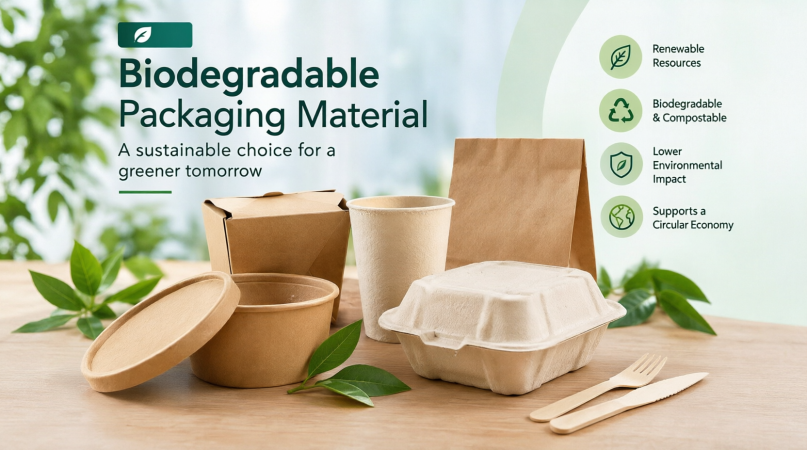
The Biodegradable Packaging Material Market is growing at a steady pace. It was valued at US$ 560.61 billion in 2025. It is expected to reach US$ 947.10 billion by 2034. That works out to a CAGR of 6.00% between 2026 and 2034. Biodegradable packaging covers materials that break down naturally after use, instead of sitting in landfills for decades. Paper, paperboard, and certain plastics fall under this category when they are designed to decompose safely. Brands use these materials for trays, bags, boxes, clamshells, films, and pouches. As more shoppers look for greener choices, this packaging is becoming a normal part of everyday products, from takeout food to online orders.
What Is Driving the Market?
Consumer habits are shifting fast. Shoppers now expect the products they buy to come in packaging that will not harm the planet. This demand is pushing brands across food, retail, and e-commerce to switch away from conventional plastic.
Material science is also playing its part. Companies are refining biodegradable plastics and paper-based formats so they perform closer to traditional packaging, while still breaking down naturally. These improvements are making biodegradable options more practical for everyday use, not just a niche choice.
Download Sample PDF https://www.theinsightpartners.com/sample/TIPRE00014605
Governments are adding pressure too. Many countries are rolling out rules that limit single-use plastics and encourage greener packaging. These policies are nudging manufacturers toward biodegradable alternatives faster than market demand alone might have done.
Despite this momentum, some hurdles remain. Biodegradable materials can cost more to produce than standard plastic, and not every region has the infrastructure to process them properly after disposal. These factors can slow adoption in certain markets, even as long-term demand keeps climbing.
Market Coverage
The report breaks the market down across two dimensions:
By Type
- Paper and paperboard
- Plastic
By Application
- Trays
- Bags
- Boxes
- Clamshells
- Films
- Pouches
By Geography
- North America
- Europe
- Asia Pacific
- South and Central America
Which Segment Leads?
Paper and paperboard remain a familiar, widely accepted choice across food service and retail packaging, thanks to easy recyclability and consumer trust. Biodegradable plastics, meanwhile, are gaining ground quickly as manufacturers develop formulations that match the strength and flexibility of conventional plastic while still breaking down naturally. On the application side, bags, boxes, and trays see the broadest use, since they cover everyday categories like takeout food, e-commerce shipping, and retail goods. Films and pouches are also expanding as brands look for lightweight, flexible alternatives to plastic wrap.
Which Region Leads?
The United States stands out as a key market. Its growth is supported by strong consumer demand for eco-friendly packaging, ongoing advances in biodegradable material technology, and government initiatives that promote greener packaging choices. Europe continues to be a strong market too, shaped by strict environmental regulations and established recycling systems. Asia Pacific is emerging as a fast-growing region, as rising incomes and growing environmental awareness push manufacturers and retailers to adopt sustainable packaging. South and Central America is also expected to see gradual growth as regulatory frameworks around plastic use continue to develop.
Which Companies Are Prominent?
Several established players shape this market:
- Amcor Limited
- DS Smith PLC
- International Paper Company
- Kruger Inc.
- Mondi Limited
- Smurfit Kappa UK Ltd.
- Stora Enso Oyj
- Tetra Pak International S.A
- Toray Industries, Inc.
- WestRock Company
These companies compete on innovation as much as scale. Many are investing in new biodegradable formulations and expanding paper-based product lines to meet demand from food and consumer goods brands. Competitive pressure is also pushing companies to strengthen their sustainability credentials, since buyers increasingly favor suppliers who can prove their packaging genuinely breaks down as promised.
Buy Premium Report: https://www.theinsightpartners.com/buy/TIPRE00014605
What Is Changing in the Market?
Plant-based biodegradable packaging is gaining real traction, as brands look beyond traditional plastic and paper toward materials made from renewable crops. This shift is opening new possibilities for packaging that performs well without relying on fossil fuels.
Smart packaging is another trend to watch. Companies are starting to combine biodegradable materials with embedded technology, such as freshness indicators or tracking features, without compromising on sustainability.
Consumer expectations continue to shape product design. Brands are under growing pressure to make packaging that looks good, functions well, and still breaks down responsibly, which is driving steady innovation across material types.
What Are the Investment Opportunities?
Eco-friendly packaging aimed at sustainability-focused brands offers a clear growth path, especially as more companies build “green” credentials into their marketing. The food industry represents another strong opportunity, since biodegradable trays, films, and pouches are well suited to fresh and packaged food products.
Consumer demand for plastic alternatives is also opening doors for manufacturers who can scale up production while keeping costs competitive. As biodegradable technology matures and regulatory support strengthens across regions, companies that invest early in this space are well positioned to capture a growing share of a market moving firmly toward sustainable packaging.
Related Reading / Reports
Explore additional research from The Insight Partners covering related packaging markets:
- Food Service Packaging Market — covers packaging formats used across restaurants, quick-service, and takeout food segments.
- Corrugated Boards Market — examines demand for paper-based corrugated packaging materials.
- Corrugated Bulk Bins Market — looks at large-format paperboard packaging used in bulk goods handling.
- Recycled Paper Market — tracks the recycled paper supply feeding sustainable packaging production.